
The White House on Sunday is witnessing a "fight night" in an octagon-shaped cage as the Ultimate Fighting Championship (UFC) fighters slug it out in the marquee event on the South Lawn on a day President Donald Trump turned 80.

The United States military has intercepted and destroyed two Iranian attack drones that posed an immediate hazard to commercial shipping lanes in the Strait of Hormuz, according to an official statement by the US Central Command late Saturday.

Pakistan is set to host face-to-face talks between the United States and Iran, aiming to solidify a fragile ceasefire and prevent further conflict in West Asia. The discussions will focus on a long-term peace arrangement, including sanctions relief, regional security, and Iran's nuclear program.

US Vice President JD Vance leads a delegation to Islamabad for talks with Iran, expressing optimism while warning against bad faith negotiations from Tehran.

US Vice President JD Vance is set to arrive in Islamabad on Monday evening to lead a high-level American delegation in a second round of ceasefire negotiations with Iran, CNN reported, citing White House on Sunday.

As the negotiations continued, the Iranian government said on social media that "talks between Iran and the US in Islamabad entered the expert-level stage as economic, military, legal, and nuclear committees joined in".

Iranian President Masoud Pezeshkian stated that Iran is considering various paths to address regional tensions, including negotiations conducted with dignity and authority, while emphasising that military gains should be reinforced through diplomacy.

A source familiar with US Treasury Secretary Scott Bessent's thinking revealed on Saturday that the department "intends to utilise all available authorities to make Iranian assets accessible for rebuilding and repair efforts related to any future damage inflicted by Iran."

By all available indications, the White House drafted a face-saving note and handed it, ready-made, to Islamabad. Pakistani Prime Minister Shehbaz Sharif was supposed to then post it in the guise of a plea urging Trump to extend the deadline by two weeks 'to allow diplomacy to run its course'. Trump would then graciously accept Pakistan's 'request' and declare a ceasefire. Sharif dutifully posted the message on X. Except that he, or whoever was handling the account, forgot to delete the tell-tale first line visible in the edit history: 'Draft - Pakistan's PM Message on X'. Prem Panicker's must read blog on the Iran War.

A social media post by Shehbaz Sharif has triggered widespread debate after an apparent 'draft' message was mistakenly published on X and later edited.

Nobody takes Pakistan seriously and therefore Pakistan's sudden mediating with almost immediate results of a ceasefire seems more contrived than real, points out Vice Admiral Biswajit Dasgupta (retd).

An Iranian delegation, led by Foreign Minister Abbas Araghchi, concluded high-level meetings in Islamabad, delivering an 'official list of demands' to Pakistani leaders for the US and Israel. This comes as President Trump cancelled his envoys' visit to Islamabad amid ongoing efforts to facilitate peace talks between Iran and the US.

Pakistan claims significant casualties inflicted on Afghan Taliban operatives during a recent military operation along the border, while diplomatic efforts are reportedly underway to find a negotiated solution.

'TTP has vowed to take revenge for the attacks that Pakistan is carrying out against Afghanistan.' 'To diminish this threat, Pakistan is hitting Afghanistan hard.'
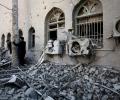
The logic of war plus the gathering storms in US politics as the midterms loom large leave him with no real alternative but to negotiate, points out Ambassador M K Bhadrakumar.
US President Donald Trump is reportedly considering launching fresh strikes against Iran if ongoing negotiations fail to produce a peace deal, according to US media outlet Axios. This development comes as diplomatic efforts continue, with Pakistan and Qatar attempting to broker an agreement.

Egypt, Pakistan, Saudi Arabia and Turkey met in Islamabad in what analysts say is the formal opening of a new diplomatic formation that could reshape the post-war regional order. Their immediate goal is a ceasefire; their larger ambition is to ensure that neither Iran nor Israel emerges from this war in a dominant position. Pakistan's foreign minister then flew directly to Beijing and mooted a Chinese role as guarantor of any eventual agreement. Prem Panicker continues his must read daily blog on the Gulf War.

Prime Minister Narendra Modi and US Secretary of State Marco Rubio discussed various aspects of India-US bilateral ties, focusing on defence, trade, energy, and technology. Rubio extended an invitation from President Donald Trump for PM Modi to visit the US.

Uncertainty surrounds the planned second round of peace talks between the US and Iran in Islamabad, as both sides engage in brinkmanship. Despite Pakistan's security preparations, Iran has yet to confirm its attendance, citing a lack of seriousness from the US in pursuing diplomacy and violations of the ceasefire.

Pakistan's Foreign Minister Ishaq Dar has been actively involved in mediating between Saudi Arabia and Iran following the outbreak of war, ensuring the safety of Pakistani citizens in affected regions.
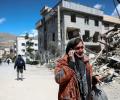
Fleur Hassan-Nahoum, special envoy, foreign ministry of Israel, has asserted that the situation has effectively been a "multi-front regional conflict" since its inception, while claiming significant military and strategic gains against adversarial forces.
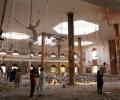
Pakistan has backed China's claim that Beijing played a role in defusing tension with India during Operation Sindoor, calling it 'diplomacy for peace' that was part of international efforts.

US President Donald Trump said the United States faces a stark choice in its approach to Iran, either to pursue a negotiated settlement or escalate militarily, as tensions continue to rise in the West Asia region.

A joint Pakistan-Afghanistan jirga in Peshawar has called for an immediate ceasefire to de-escalate tensions between the two countries, emphasising dialogue and mutual respect.

Iran's Foreign Ministry has denied reports of planned talks with the United States during a visit to Islamabad, Pakistan, despite US envoys also visiting the region.

The meeting follows a ceasefire agreement that was announced and welcomed by Shehbaz Sharif, who also extended invitations to both delegations for further negotiations.

In a significant diplomatic manoeuvre aimed at de-escalating regional tensions, Iran has reportedly submitted a "new proposal" to the United States through Pakistani intermediaries.

The Congress party has criticised Prime Minister Narendra Modi's diplomatic efforts following the ceasefire agreement between the US and Iran, facilitated in part by Pakistan. The party claims this development undermines Modi's strategy and exposes his perceived failures in foreign policy.

Iranian Foreign Minister Abbas Araghchi visited Pakistan for the second time in three days amid uncertainty surrounding potential peace talks with the US. The visit follows discussions in Oman regarding regional security and efforts to resolve the Iran-US conflict.

Pakistan's Foreign Office has refuted media reports suggesting that its efforts to facilitate peace talks between the US and Iran have stalled, calling the reports baseless and speculative.

A media report indicates the White House was directly involved in crafting a social media post by Pakistan's Prime Minister Shehbaz Sharif, requesting then-US President Donald Trump to extend the deadline on Iran.

The Congress party has called on the BJP-led government to adopt a unified national approach to restore India's role as a voice for peace, criticising the government's foreign policy and its impact on India's global standing.

'We were in a heavily nuclearised environment. China had tested for Pakistan in the 1980s and helped their missile programme stay just one step behind us.'

Pakistan declared an 'open war' with Afghanistan following airstrikes targeting Taliban fighters in response to alleged cross-border attacks. The situation has drawn international concern, with calls for de-escalation and diplomatic resolution.

Pakistan is set to host the foreign ministers of Saudi Arabia, Egypt, and Turkiye to discuss a range of issues, including de-escalating tensions in West Asia.

J D Vance heads to Islamabad for high-stakes US-Iran talks, balancing cautious optimism with a warning against bad faith. negotiations.

Pakistani Prime Minister Shehbaz Sharif is actively engaged in diplomatic efforts to de-escalate tensions in West Asia, offering to host talks between the US and Iran and engaging with regional leaders to promote peace and stability.

India would confront a more entrenched China, a less dependable United States, and a regional order increasingly shaped by great-power bargaining over which it exercises limited influence, notes Amberish K Diwanji.
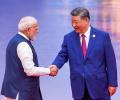
For India, China's Indian Ocean power projection, maritime domain awareness, dual-use ports, underwater surveillance, antisubmarinewarfare, naval exercises with Pakistan, pose considerable pressure, depleted India's strategic depth and marginalises Indian role, points out Srikanth Kondapalli.

Delegations from the US and Iran have arrived in Islamabad for talks aimed at resolving the conflict between the two nations, following a ceasefire brokered by Pakistan. The negotiations are being closely watched due to their potential impact on regional security and global diplomacy.
